


Susanne Bock about her life
The life of Susanne Bock
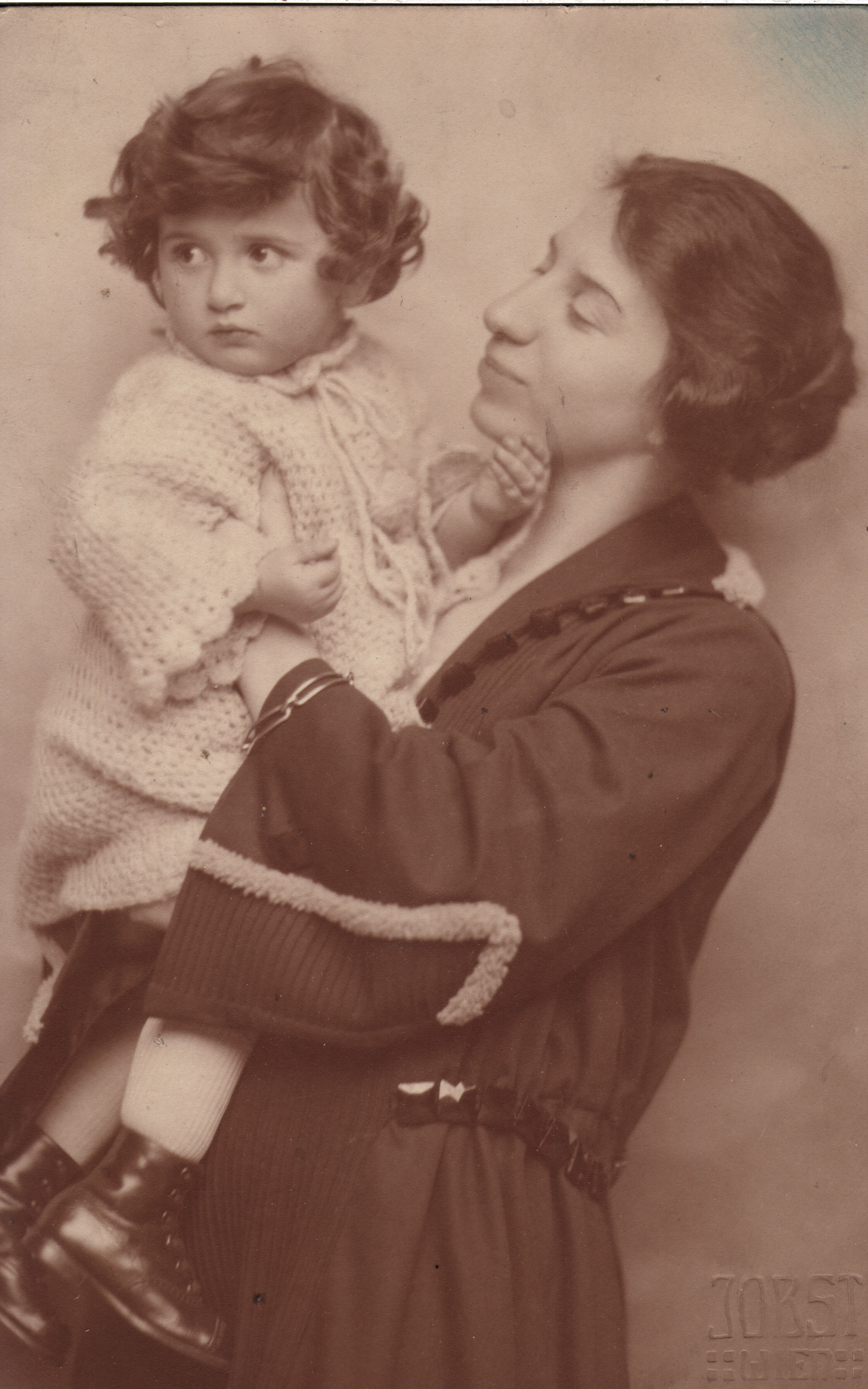
Picture of Susanne Ha(c)kl and her mother Rosa Hakl, 1921
Susanne Bock was born in May 1920 as the daughter of jewish parents – her parents separated early, so she had no siblings. As a consequence of the divorce money was always sparse and her mother Rosa had a hard time managing the family finance. Thus the selection of a school was rather depending on the fee to be due every month than Susanne’s interests and inclinations.
Susanne took part in a singing group of the “Kinderfreunde”, a front-end organization of the Social Democratic Party, when she attended elementary school and joined the “Rote Falken”, the Youth Organization of the Social Democratic Party, in 1932. The riots in February 1934 and the subsequent ban of the Social Democratic Party made Susanne act as an illegal activist; she strewed about socialist party emblems in the streets of Vienna, smudged walls and took part in demonstrations against the fascist regime. She was arrested end of April 1936, shortly before her 16th birthday, and incarcerated in the infamous penitentiary on -”Elisabethpromenade” (today “Rossauerlände” in Vienna’s 9th district) for a few days.
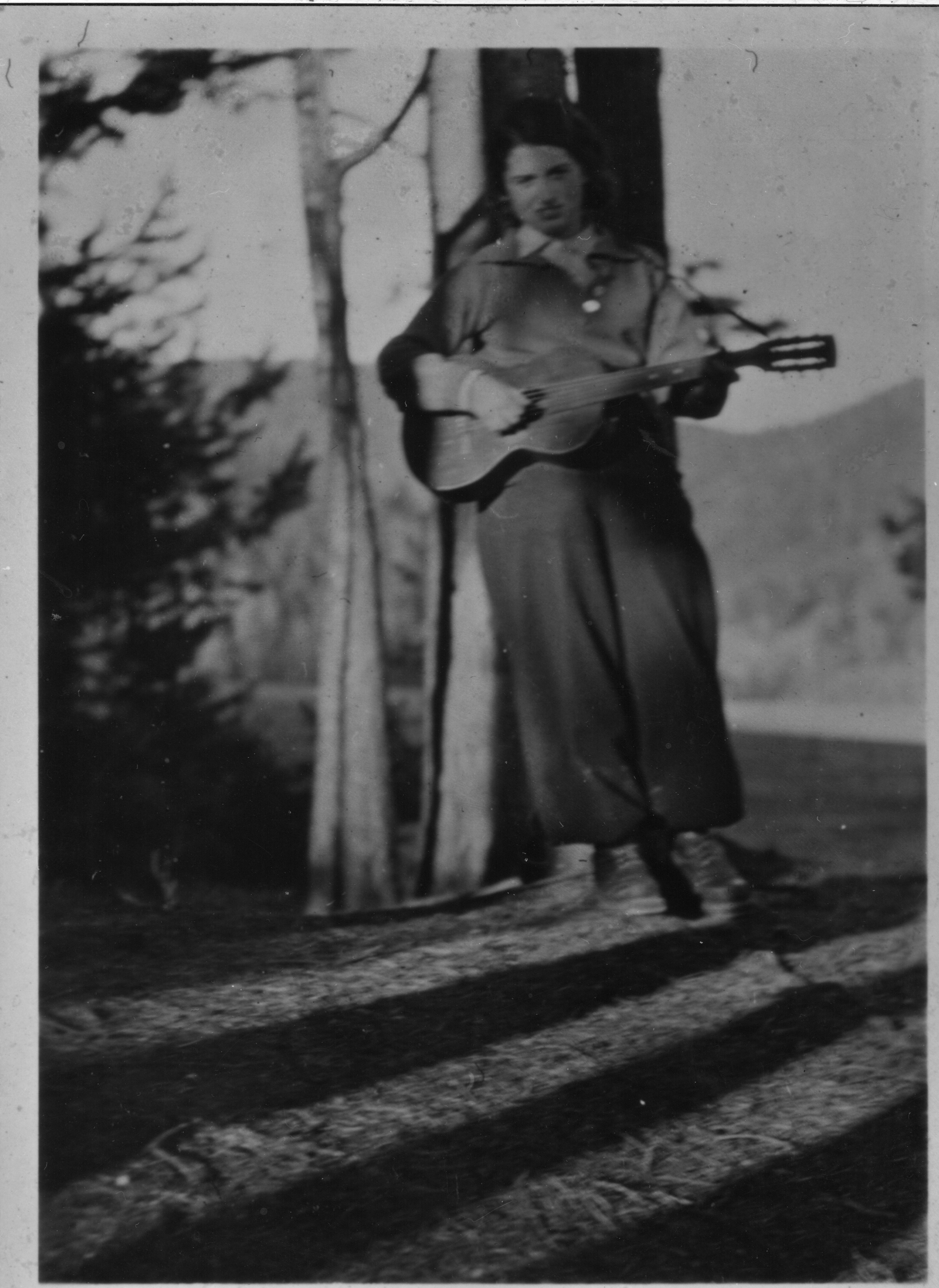
Picture of Susanne Ha(c)kl with a guitar, 1936
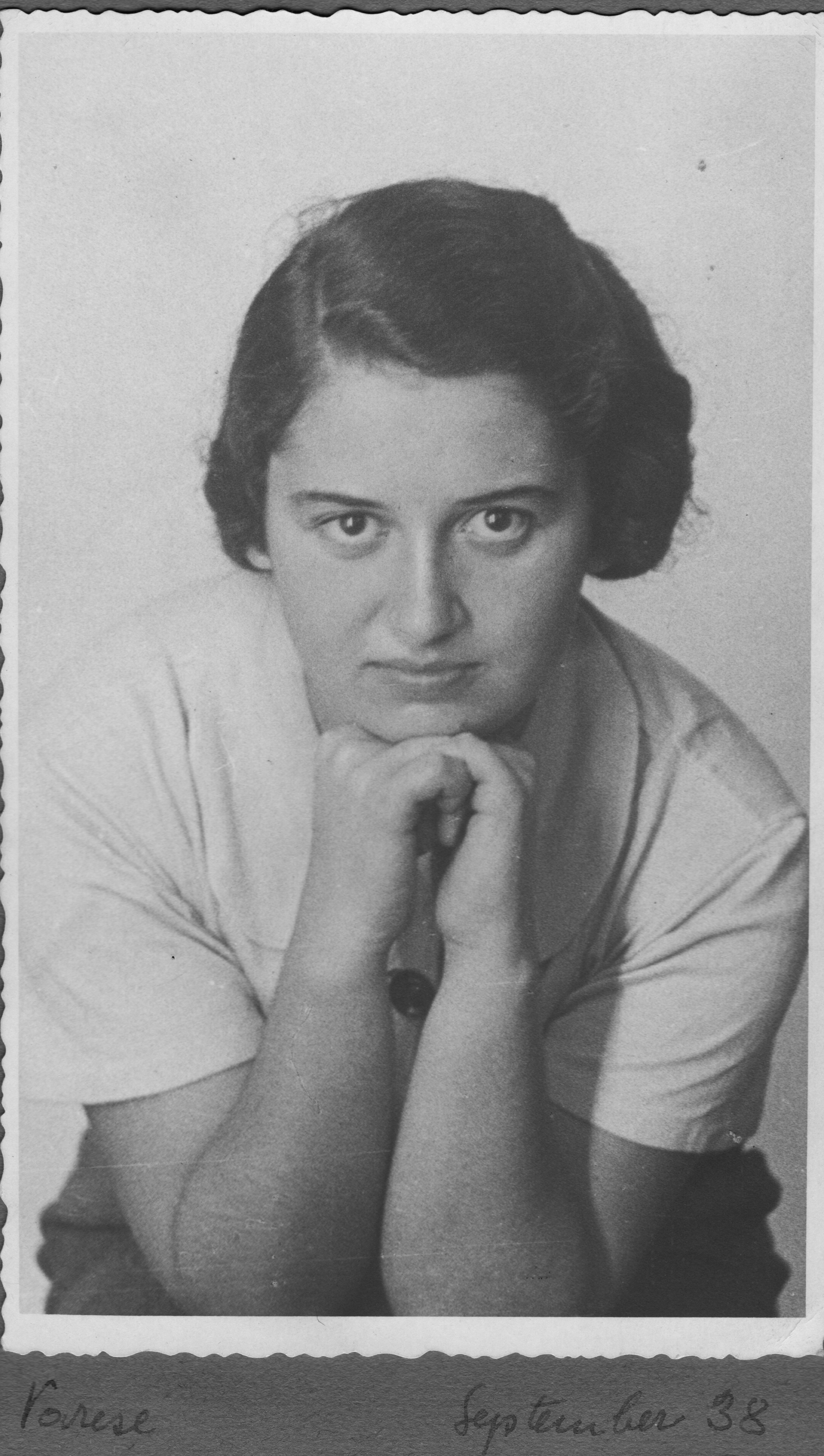
Picture of Susanne Ha(c)kl , September 1938
Susanne’s life changed dramatically in 1938 due to the “Anschluss” (annexation of Austria by the armed forces of the “Third Reich”). Her family who did not practice the jewish faith, and in which mixed marriages were predominant, were target of mockery occasionally; also an elementary school teacher, an illegal nazi, caused troubles frequently. Of the siblings of Susanne’s mother Rosa only one stayed in Austria during the NS-regime – he survived WW2 with his son as a so called “U-Boot” – in the underground. The other siblings left Austria with their families. Susanne’s father was deported out of a hospital bed and died on the transport to Minsk.
Susanne was immediately affected by the “Anschluss” as she had to leave the classroom on the spot on April 12th; the beadle entered the classroom announcing that all jewish pupils have to leave instantly. For jewish pupils a provisional school was adapted in Vienna’s second district, enabling Susanne to pass the “Matura” (matriculation examination). A report was not issued by the directorate, she just received an informal acknowledgment stating that she had passed the final exam. Her friend and later (second) husband Wolfgang Bock collected the matriculation report and kept the document until Susanne’s return in 1946.
The relationship between Wolfgang and Susanne – Wolfgang being arian and Susanne jewish – was considered “Rassenschande” (racial shame), which could have been avenged by the Viennese inhabitants by brute violence and was also fought by the regime. Meeting in the public was impossible, the couple thus arranged long hikes in the early morning to spend time together.
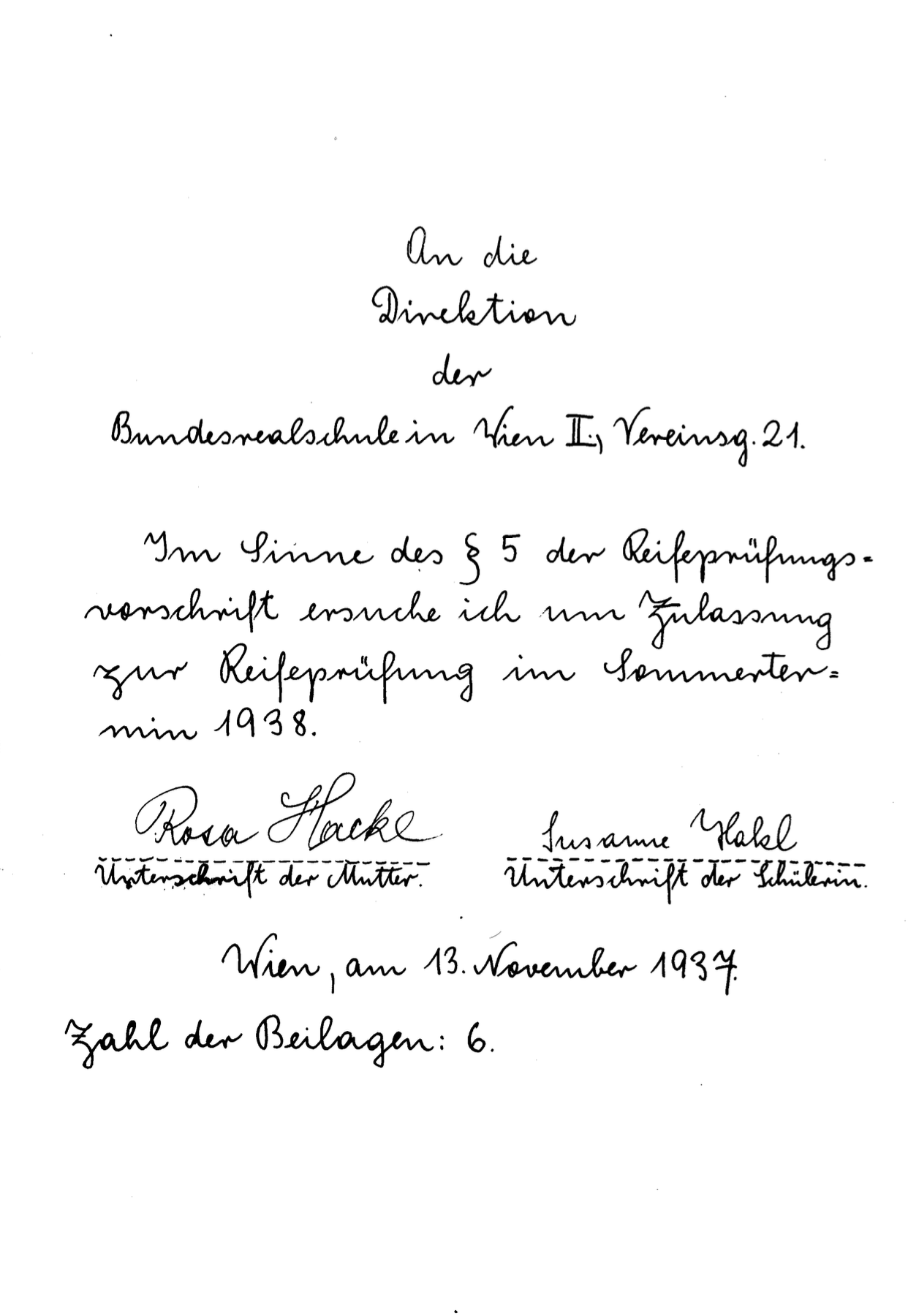
To the Directorate of the Federal Secondary School in Vienna II, Vereinsgasse 21
In accordance with § 5 of the final examination regulations, I hereby request admission to the final examination for the summer session of 1938.
Rosa Hackl (signature of the mother)
Susanne Hackl (signature of the student)
Vienna, November 13, 1937
Number of enclosures: 6
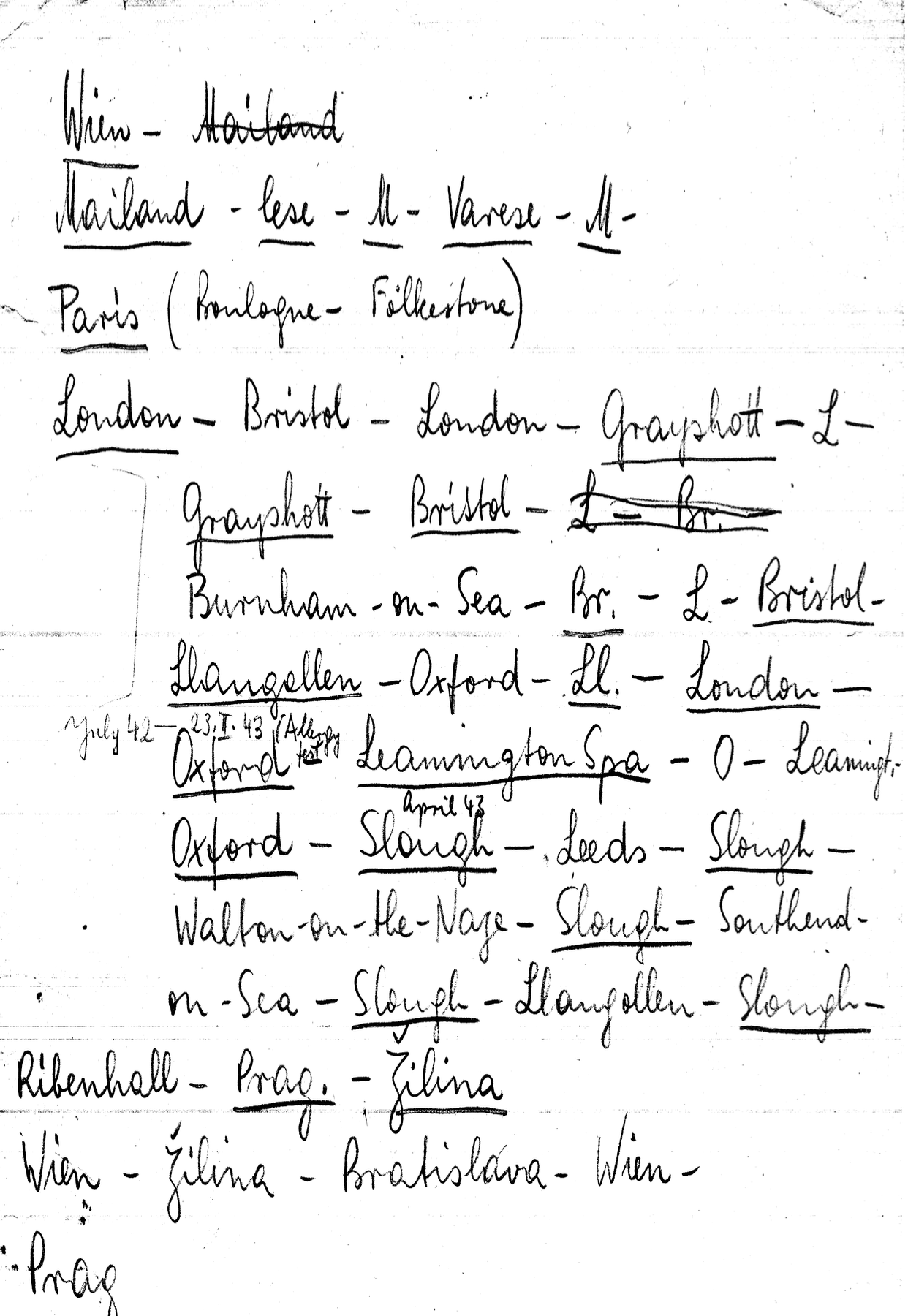
List of Susannes Odyssey during her exile.
After having passed the matriculation examination in June 1938 Susanne learned about imprisonment of persons enlisted with the police in the years of fascism. As her arrest in 1936 was known to the police, she immediately made up her mind to flee from Vienna. She first traveled to Milan and arrived in England after an odyssey via France in February 1939.
Susanne’s mother Rosa left Vienna after the “Novemberpogromen” (pogroms took place on November 8th and 9th throughout the “Third Reich”) and flew to England. In her flat a jewish family expelled from “Burgenland” (south eastern county of Austria) remained, as the authorities aimed at the county to be “judenrein” (free of jews).
In 1940 Susanne married for the first time, a Slovak, Ivan Lipšer, with whom she moved to Žilina in Czechoslovakia after the war. Her husband’s family – mother, sister with her husband and their little daughter – were deported and did not return – most probably they were murdered. Some relatives of Susanne’s husband had survived in a camp and returned to Žilina. She was striving to learn Slovak quickly as she was frequently addressed as “German” or “Jewish”. There were some pogroms after the end of WW2 against jews, and Susanne was frightened to be affected.
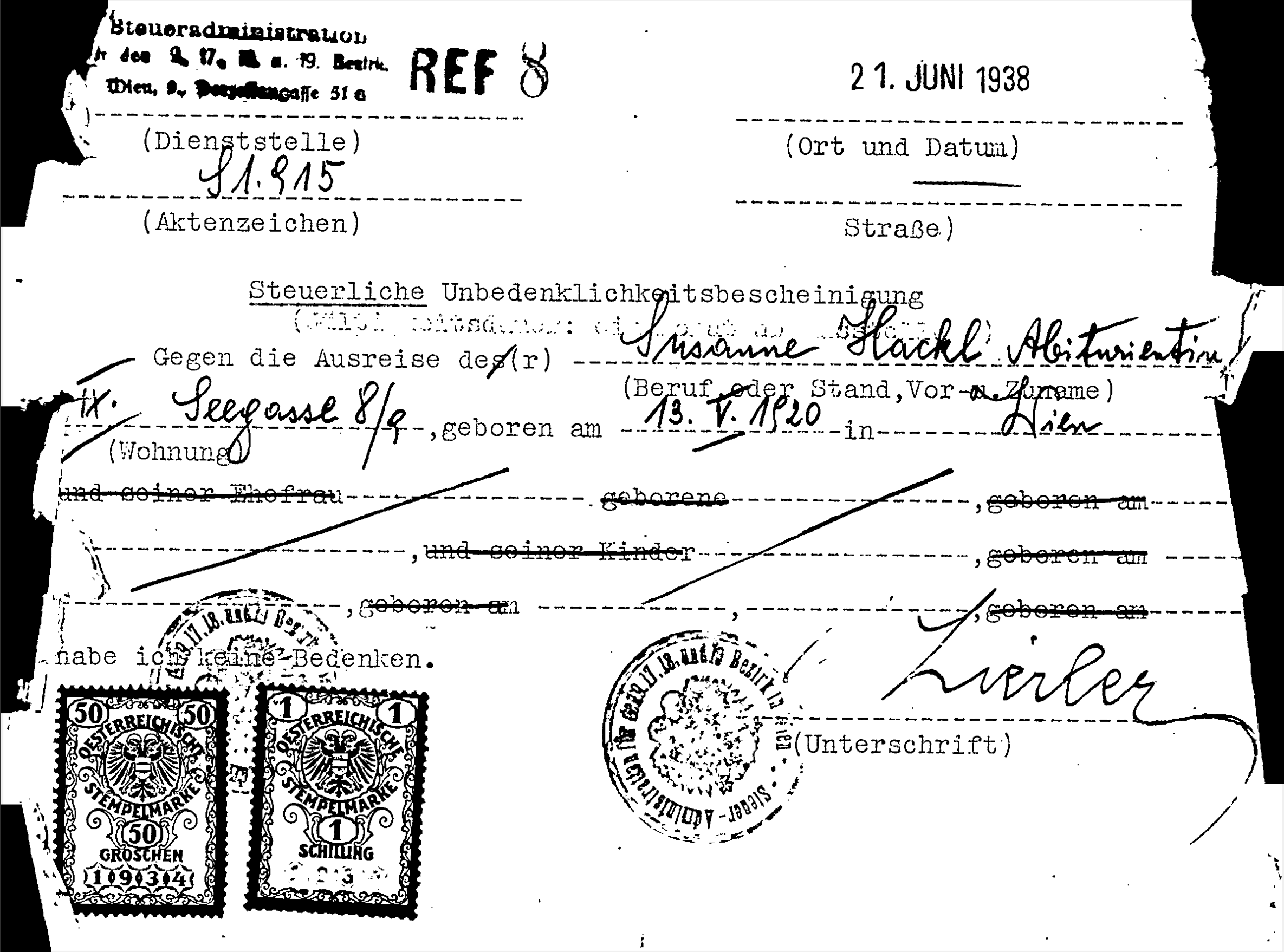
Copy of Susannes tax clearance certificate
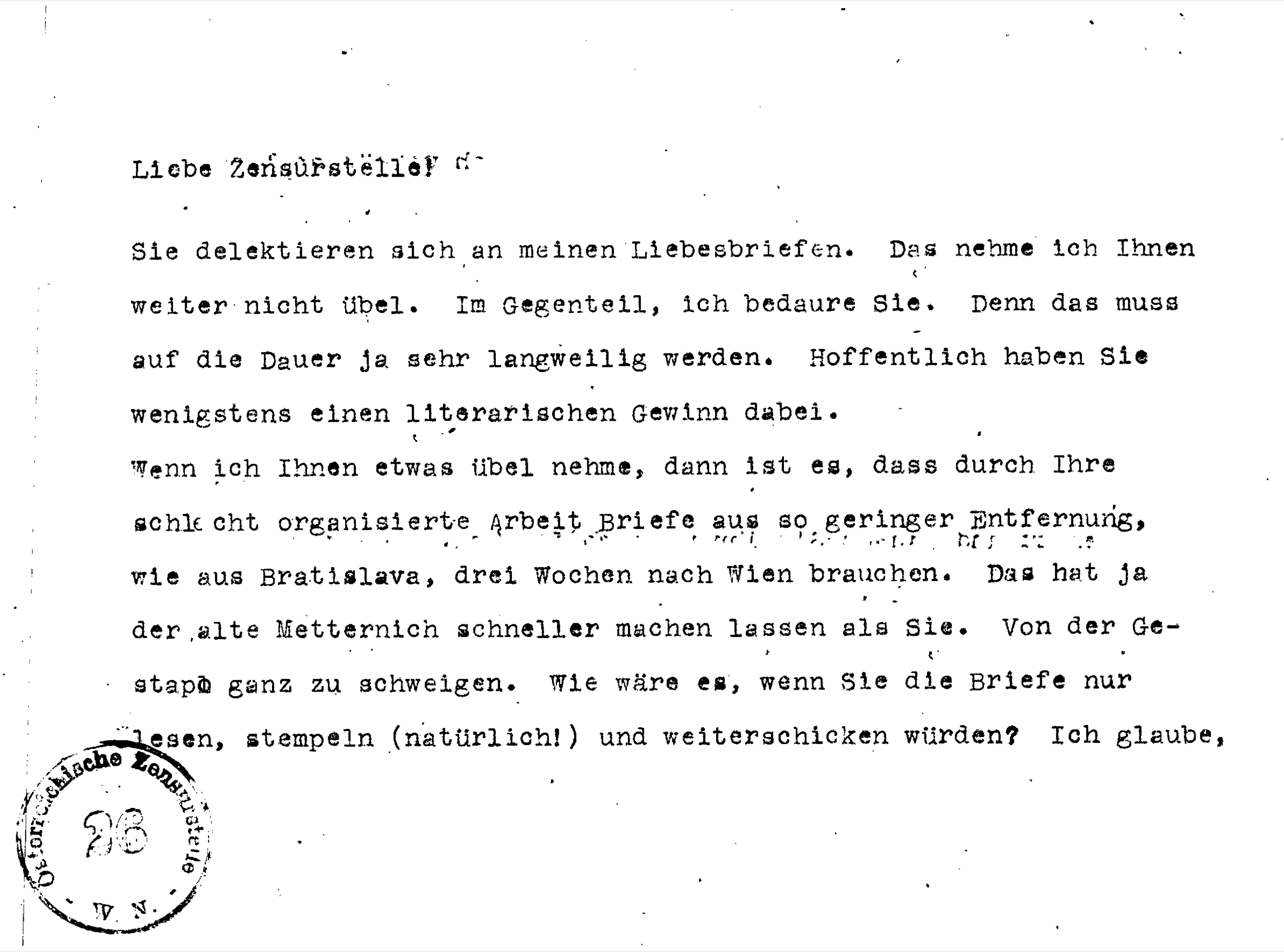
Dear Censorship Office,
You delight in reading my love letters. I don’t hold that against you. On the contrary, I feel sorry for you. That must get terribly boring over time. Hopefully, at least you're gaining some literary value from them.
What I do hold against you is that, due to your poorly organized work, letters from such a short distance—like from Bratislava—take three weeks to reach Vienna. Even old Metternich managed that faster than you do. Not to mention the Gestapo.
How about this: you read the letters, stamp them (of course!), and send them on their way? I believe
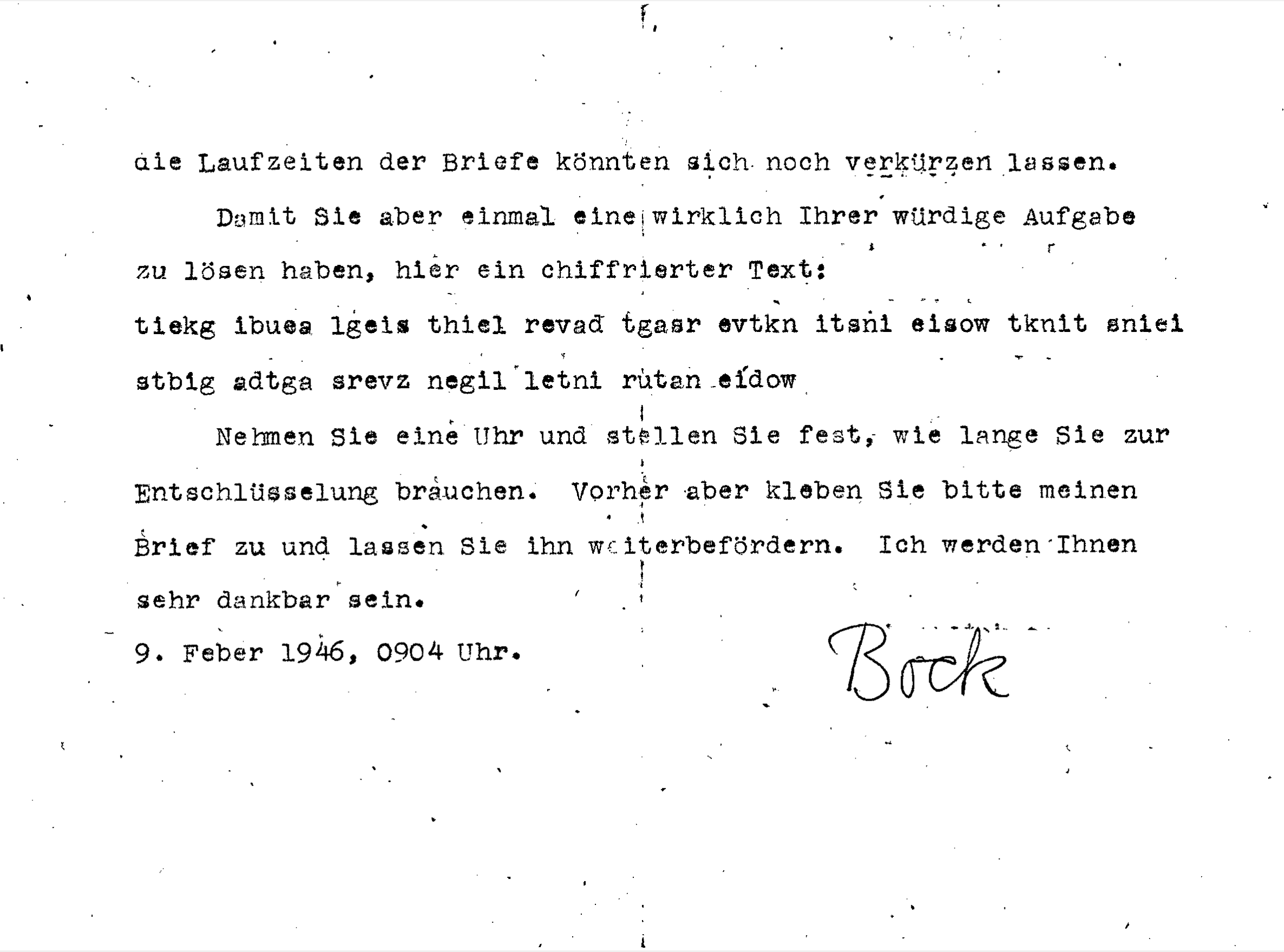
the delivery time could be improved.
But so that you finally have a task truly worthy of your skills, here is a ciphered message:
tiekg ibuea gleis thiel revad tgasr evtkn itsni eisow tknit sniei stbig adtga srevz negil lenti rutan eidow
Take a clock and see how long it takes you to decode it. But before that, please seal up my letter again and allow it to be forwarded. I would be very grateful.
February 9, 1946, 09:04 a.m.
Bock
At the very end of the year 1945 a letter from Susanne’s former boyfriend Wolfgang Bock arrived. She left her husband on January 6th and traveled to Vienna where she arrived on January 8th. After the divorce from her first husband Ivan on May 9th, 1949 she married Wolfgang Bock on June 23rd, 1949. (They were married for 63 years).
Re-integration in Vienna was a difficult thing to achieve for Susanne. She was desperately disappointed to discover, that comprehension, compassion, obligingness, perhaps a sense of indebtedness against jews were denied. She experienced total lack of comprehension by the inhabitants, consequent ignorance of the events, showing off innocence instead of complicity. The only people worth compassion and support were “Volksdeutsche”, people from east and southeast Europe with German ethnicity (“Volkszugehörigkeit”) but non-German citizenship (“Staatszugehörigkeit”). In the mindset of Austrians at that time it were “only jews” 180,000 in numbers, who were “detained” in a mostly cruel way , after they were subject to harassment, maltreatment, and robbery.
The jews who were lucky to save their lives, were confronted with the opinion that they spent the time of WW2 comfortably, whilst the innocent Austrians – the “Third Reich’s” first victim – had to suffer exorbitantly.
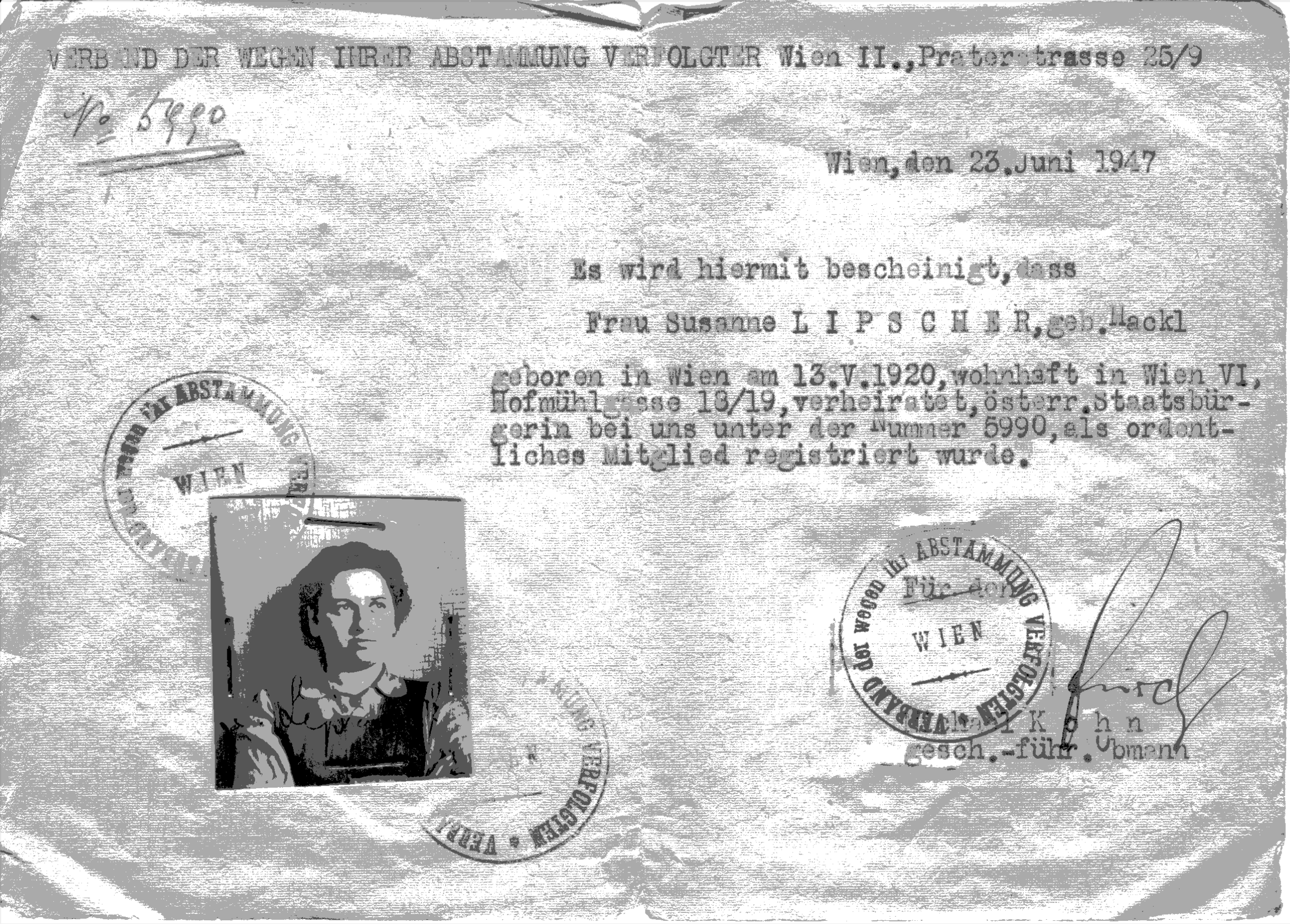
Association of Persons Persecuted Due to Their Descent
Vienna II, Praterstrasse 25/9
Vienna, June 23, 1947
This is to certify that Mrs. Susanne Lipscher, née Hackl, born in Vienna on May 13, 1920, residing at Vienna VI, Hofmühlgasse 18/19, married, Austrian citizen, has been registered with us as a regular member under the number 5990.
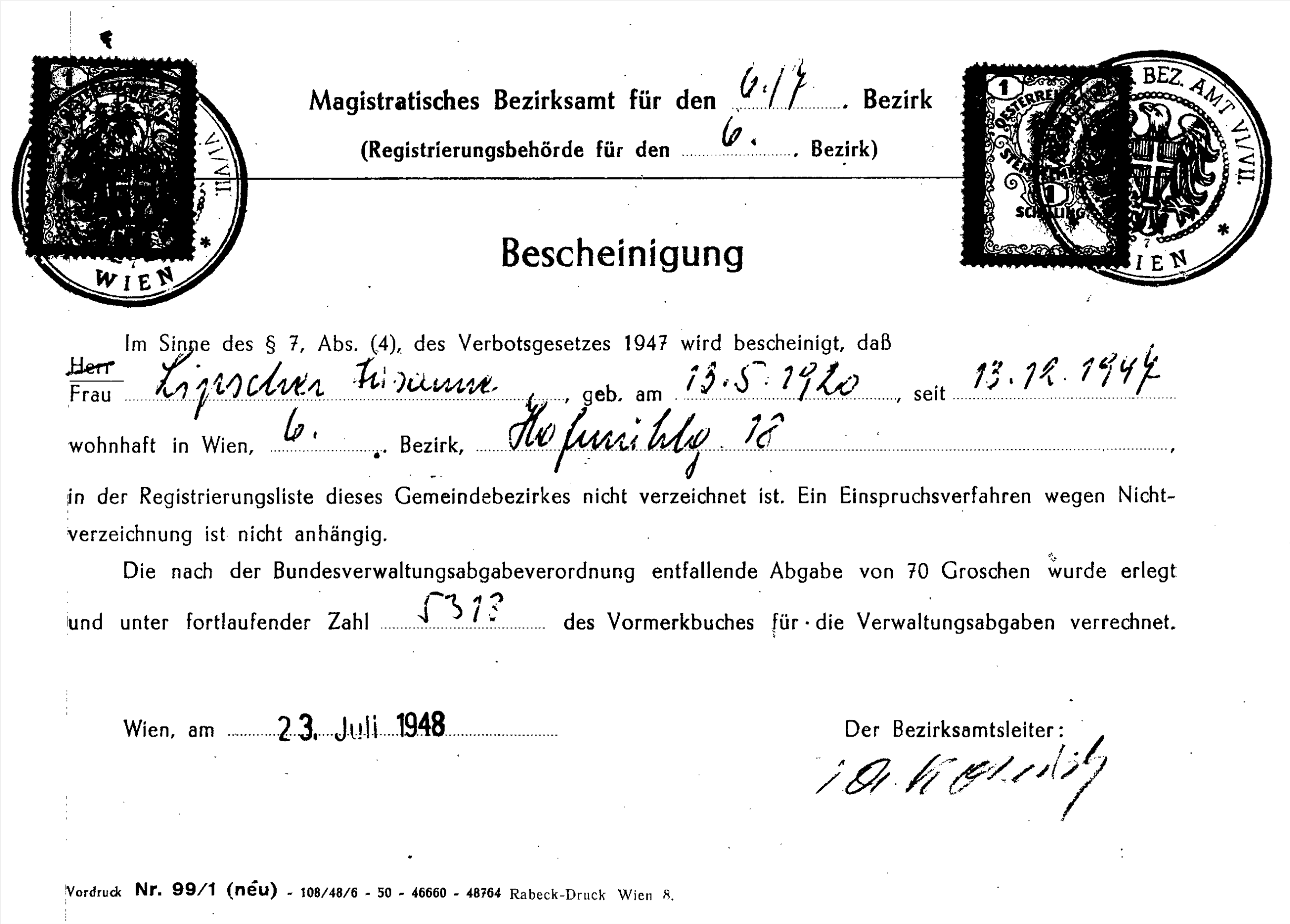
Magistrate District Office for the 6th/7th District
(Registration Authority for the 6th District)
Certificate
In accordance with § 7, paragraph (4), of the Prohibition Act of 1947, it is hereby certified that Mrs. Susanne Lipscher, born on May 13, 1920, residing since December 13, 1947, in Vienna, 6th District, Hofmühlgasse 18, is not listed in the registration list of this municipal district.
No appeal procedure regarding the absence from the list is pending.
The administrative fee of 70 groschen, waived under the Federal Administrative Charges Regulation, has been paid and recorded under entry number 5318 in the register of administrative fees.
Vienna, July 23, 1948
The District Office Head
This lack of understanding was obvious when Susanne Bock tried to credit the years of emigration in England and Wales against her pension. The official checked the application and refused the request. Upon Susanne's reclamation he asked polemically: "Dear madam, why did you leave (Austria)?"
Every day antisemitism was obvious in Vienna especially regarding aid organizations. Support of aid agencies to Vienna's non-jewish inhabitants were appreciated thankfully whilst they were jealously hostile to jewish recipients of support by jewish aid agencies from abroad.
There was also no support from official Austria for Susanne to find an occupation. She passed the matriculation exam in 1938, but she did not learn a trade. Due to her emigration she was not able to start studying; occupations she practiced during her exile did not entitle her to practice in post-war Austria, although she was able to prove proficiency. Her excellent knowledge of English made it possible to work for the press office of the British forces and later for the "American Joint Distribution Committee".
Finding a place to live in post WW2 Vienna was difficult, even more for citizens like Susanne who returned from emigration after seven years. The rent flat Susanne and her mother had lived in until their emigration still existed and Susanne claimed its restoration in 1946, but there was no legislation for this. The housing office assigned her a very small apartment which had been used to store inventory. The former lessee – a former SS soldier complained that “his” apartment was let, and the inventory removed; he seemed to have been informed by other inhabitants of the house. The caretaker refused to accept the rental fee from Susanne, to avoid a regular tenancy to originate, so she had to place the rent on a law court account. Once Susanne returned from work to find out there was no electrical power in her apartment; neighbors had “borrowed” her fuses from the fusebox on the corridor and “forgot” to return them. As a consequence Susanne had to remove the fuses from the fusebox every morning before going to work, store them in her apartment and put them back into place in the evening. One evening Susanne was unable to open the apartment door with the key. The other inhabitants told her, that the “owner” had the door opened with the aid of a locksmith and the lock changed. She called the police, (the officer in charge was a Nazi opponent from the French resistance movement), the lock and keys were restored to her. The lessee claimed the return of the apartment at court – Susanne who was married to Wolfgang Bock in the meantime – had to find a new place to live.
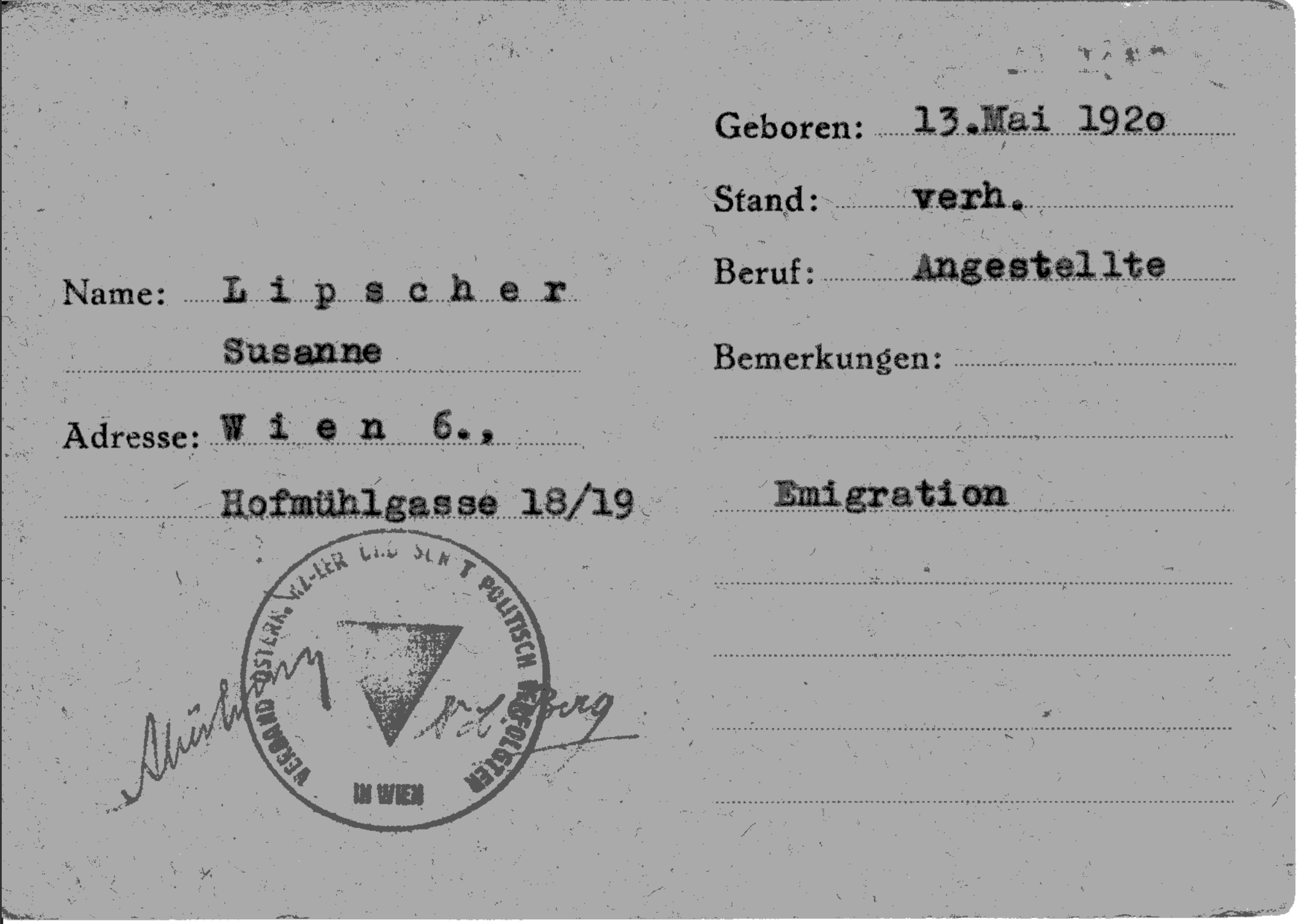
Copy of Susannes concentration camp survivor ID
Susanne Bock especially describes her life after WW2 with its ups and downs in her book “Heimgekehrt und fremd geblieben”. She started to study linguistics in 1978 and graduated as PhD in 1993. Her feeling of not being welcome ceased gradually during her university studies due to the extensive exchange she had with her mates. They requested Susanne to write down her biography as a contemporary witness for future generations.
As such she always reported her experiences as a contemporary; her messages were “Never forget” and “Do not let it take root” (“Nip it in the bud”? “Resist the beginnings”). Messages which she advocated for all the time of her life and passed it on to the following generations in many a dialogue. She stays a political individual for all her life.
Susanne Bock passed in Vienna on July 22nd, 2022 aged 103.